Production Stages
Six Steps from Orchard to Capsule
Kernel Sourcing & Selection
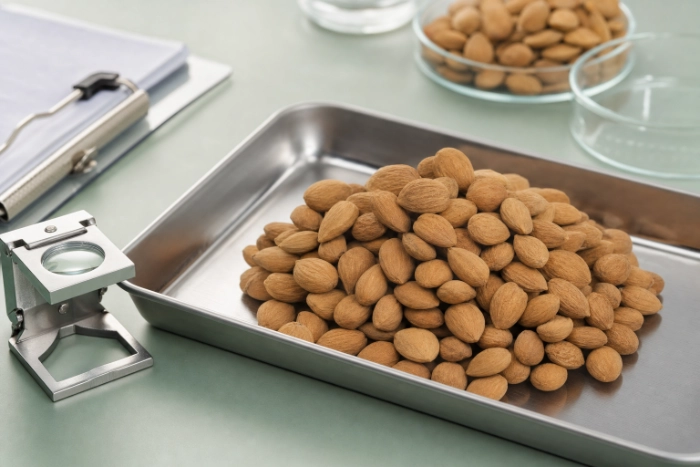
Bitter apricot kernels (Prunus armeniaca var. amara) sourced as a byproduct of the food processing industry in Central Asia and the Mediterranean. Only bitter cultivars accepted — sweet varieties contain negligible amygdalin. Each incoming lot is inspected for moisture content, contamination, and integrity.
Shelling & Testa Removal
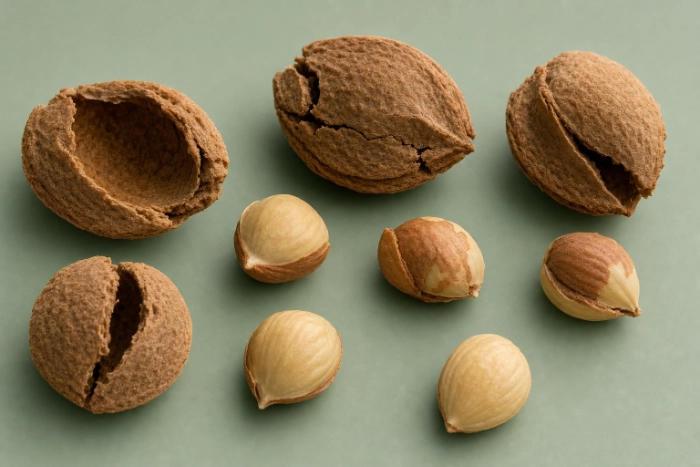
Kernels are mechanically cracked to remove the hard endocarp (stone shell). The inner seed is then dehulled to strip the thin testa (seed coat), exposing the pale cotyledon tissue and maximising extraction efficiency.
Cold-Press Oil Separation
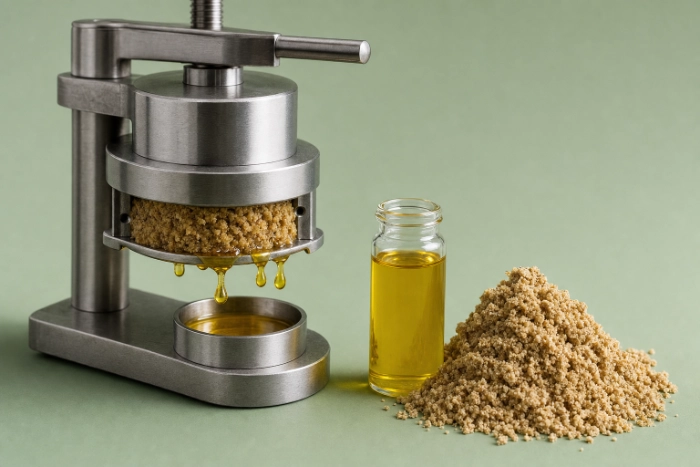
Cotyledon tissue contains 45–55% fixed oil by weight. A cold-press step expels this oil before extraction. The separated kernel oil is a secondary product. The resulting press cake retains the glycoside fraction intact.
Amygdalin Extraction & Purification
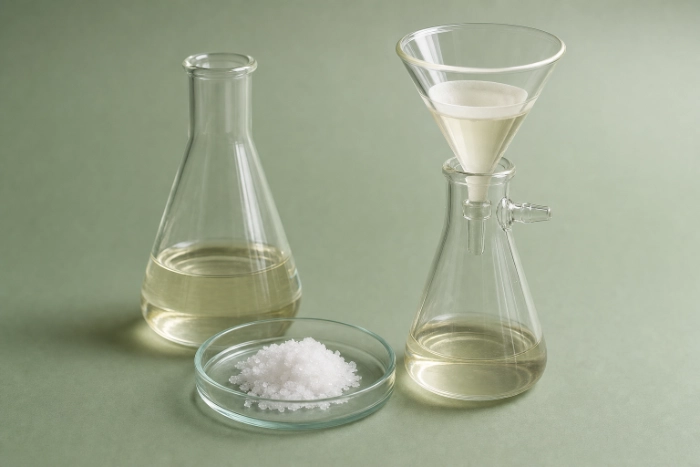
The defatted press cake undergoes aqueous extraction. The extract is filtered, concentrated, and purified through precipitation and crystallization steps to remove co-extracted proteins and polyphenols, yielding a standardized amygdalin fraction.
Independent Laboratory Testing
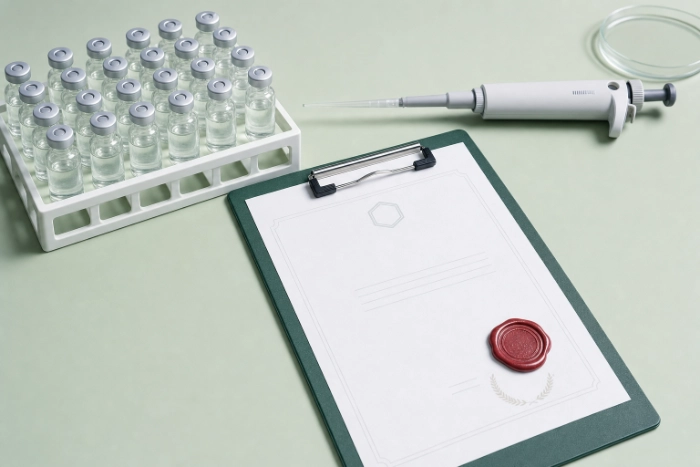
Every production lot is submitted to independent third-party laboratory analysis before release. Testing confirms identity, purity, and absence of contaminants. A Certificate of Analysis (COA) is issued per lot and accompanies every shipment.
Filling, Packaging & Distribution
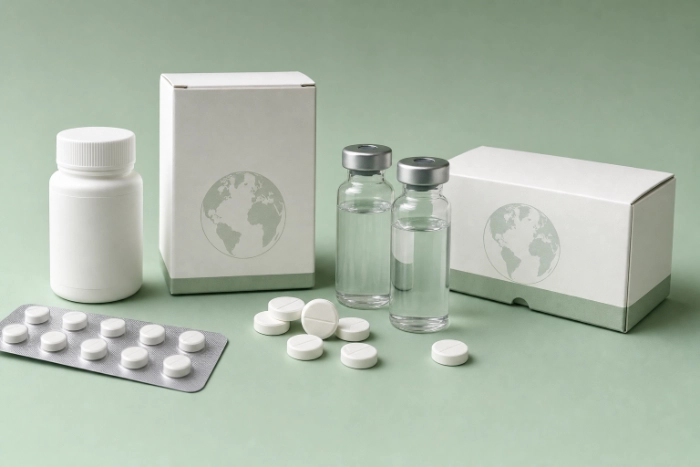
Purified amygdalin is filled into final form — 100 mg or 500 mg oral tablets, or 3 g/10 ml injectable solution — under controlled conditions. Cold-chain packaging available for injectable product. Ships internationally from TJ Supply's US facility.