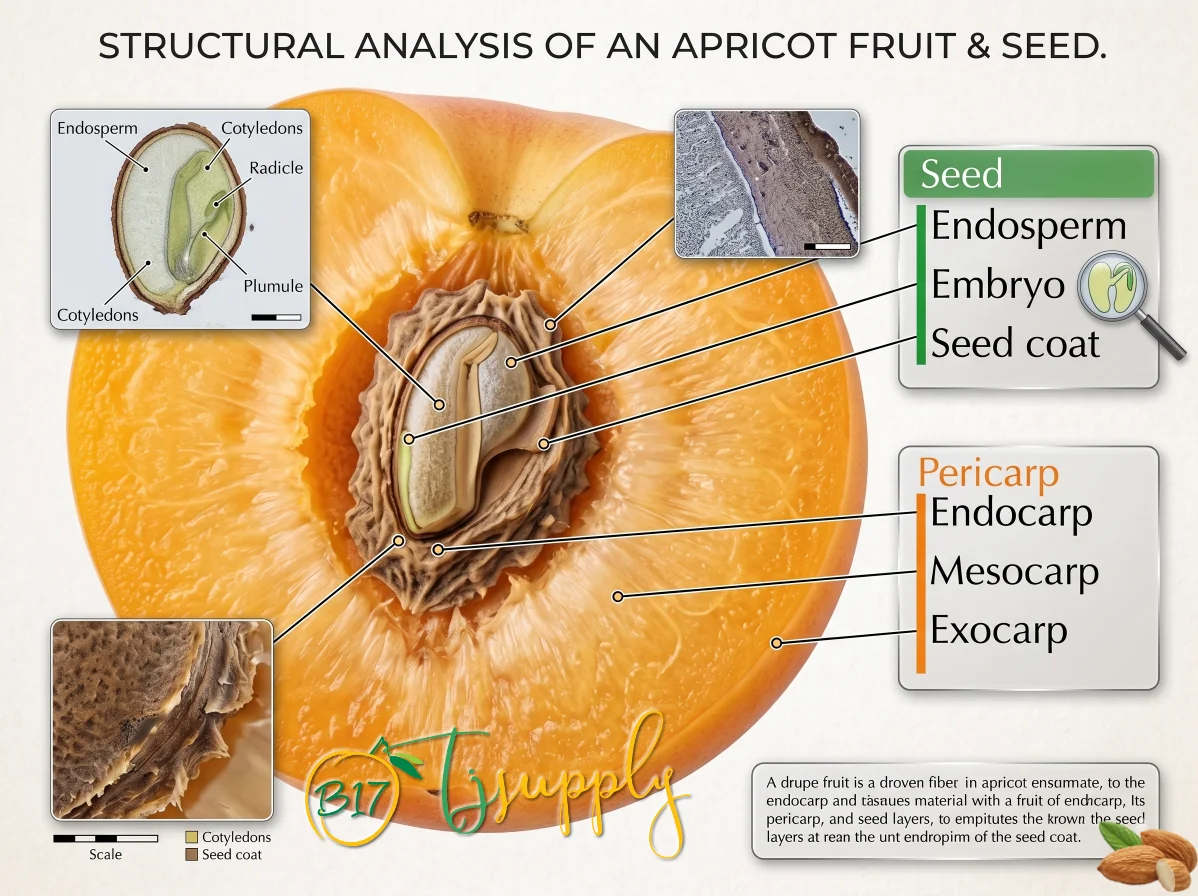
A cross-section guide to the fruit, stone, and seed — the primary natural source of amygdalin.
Structure
Each layer of the apricot plays a distinct role — only the innermost seed contains amygdalin.
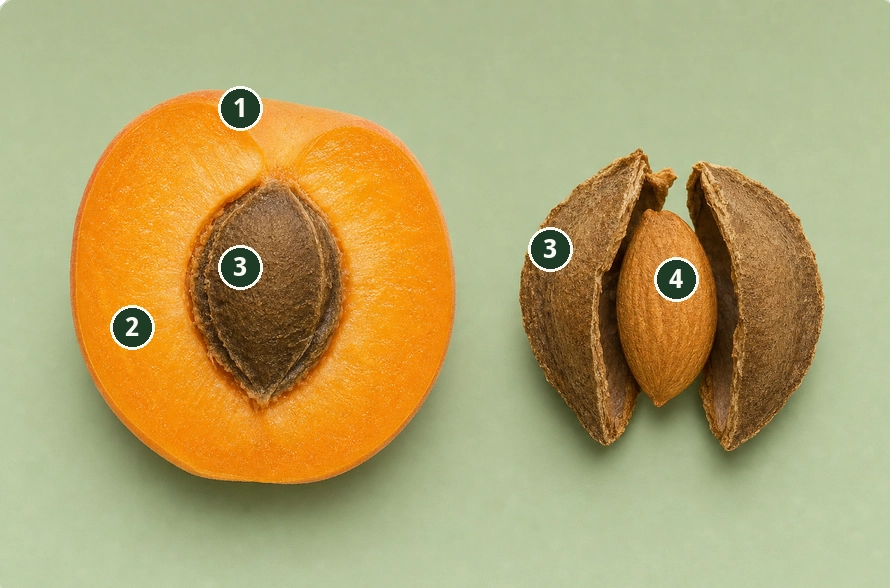
Thin velvety outer layer covering the fruit's surface, rich in protective waxes and pigment.
Juicy orange tissue that makes up the edible fruit. Contains sugars, carotenoids, and organic acids — roughly 80% of total fruit weight.
Hard, woody shell that encases and protects the seed. Lignified structure characteristic of all Prunus stone fruits.
Where amygdalin is concentrated — the focus of this guide and the raw material sourced for Novodalin® supplements. Inner cotyledons contain the highest levels.
Botanical Notes
Bitter apricot kernels (var. amara) contain substantially more amygdalin than sweet varieties. TJ Supply sources exclusively from bitter cultivars to ensure maximum potency.
Prunus armeniaca belongs to the same genus as peaches, cherries, and plums — all containing amygdalin in their kernels, though at lower concentrations than apricot.
Kernels contain 40–55% fixed oil. Cold-pressing removes the oil fraction before extraction, isolating the glycoside fraction needed for pharmaceutical-grade amygdalin.
Central Asia (Uzbekistan, Kazakhstan) and the Mediterranean basin produce the preferred bitter apricot cultivars with consistent amygdalin levels suitable for pharmaceutical-grade extraction.
Each apricot yields a single kernel weighing 0.3–0.5 g. Industrial sourcing uses stone-fruit byproduct from food processing — reducing waste while supplying the supplement industry.
Kernels are selected by amygdalin content per lot, verified by certificate of analysis. Each batch is traceable from source to finished Novodalin® product with HPLC-verified purity ≥98%.
TJ Supply — Since 2001
TJ Supply distributes pharmaceutical-grade amygdalin sourced from bitter apricot kernels — standardized, HPLC-verified, and traceable from Central Asia to your doorstep.
Raw apricot kernels should be consumed with caution. The European Food Safety Authority (EFSA) advises adults to consume no more than 3 small kernels per day due to cyanide risk; children should avoid them entirely. Amygdalin/Laetrile is not FDA-approved as a cancer treatment.
Sources: PMC/NIH botanical & phytochemistry literature, Wikipedia, European Food Safety Authority (EFSA) — general Prunus/amygdalin research
Educational infographic — not medical advice. These statements have not been evaluated by the Food and Drug Administration. This product is not intended to diagnose, treat, cure, or prevent any disease.