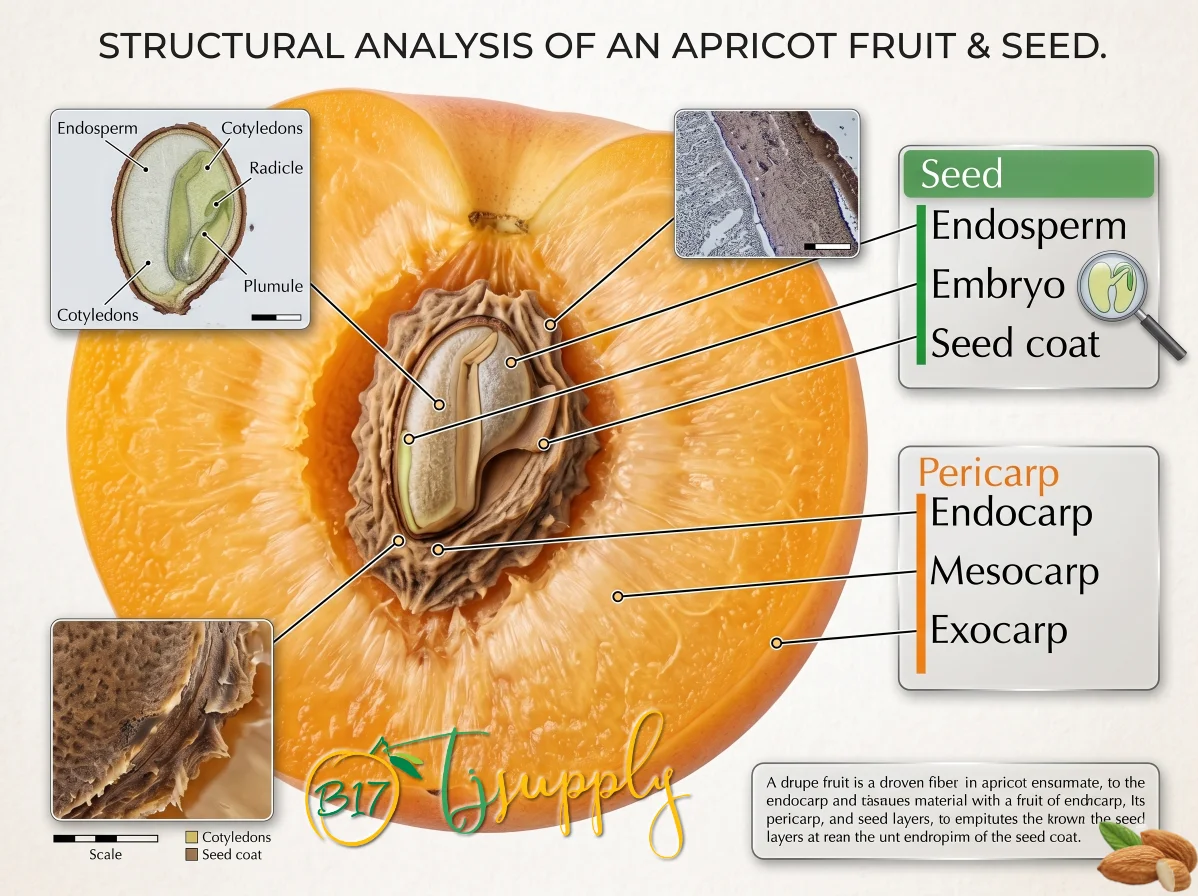
The richest food sources of vitamin B17 (amygdalin) are the kernels inside stone fruits. Bitter apricot kernels and bitter almonds contain the most, followed by plum, apricot and peach kernels. Apple and pear seeds contain smaller amounts, and squash, melon and cucumber seeds contain only traces. The fruit flesh itself contains little to none.
Below is a ranked list of more than 20 foods whose amygdalin content has been measured in the lab. It is followed by foods that often appear on B17 lists but actually contain a different compound, and by guidance on how many apricot kernels are safe to eat.
- Amygdalin is concentrated in seeds and kernels, not in fruit flesh, vegetables, or grains.
- Bitterness is a signal. Bitter apricot kernels average about 6 times more amygdalin than sweet ones, and bitter almonds contain hundreds of times more than supermarket almonds.
- Cassava, lima beans, flaxseed and sorghum contain other cyanogenic compounds, not amygdalin.
- Raw apricot kernels release cyanide. EFSA puts the safe amount for an adult at about three small kernels in one sitting, and less for children.
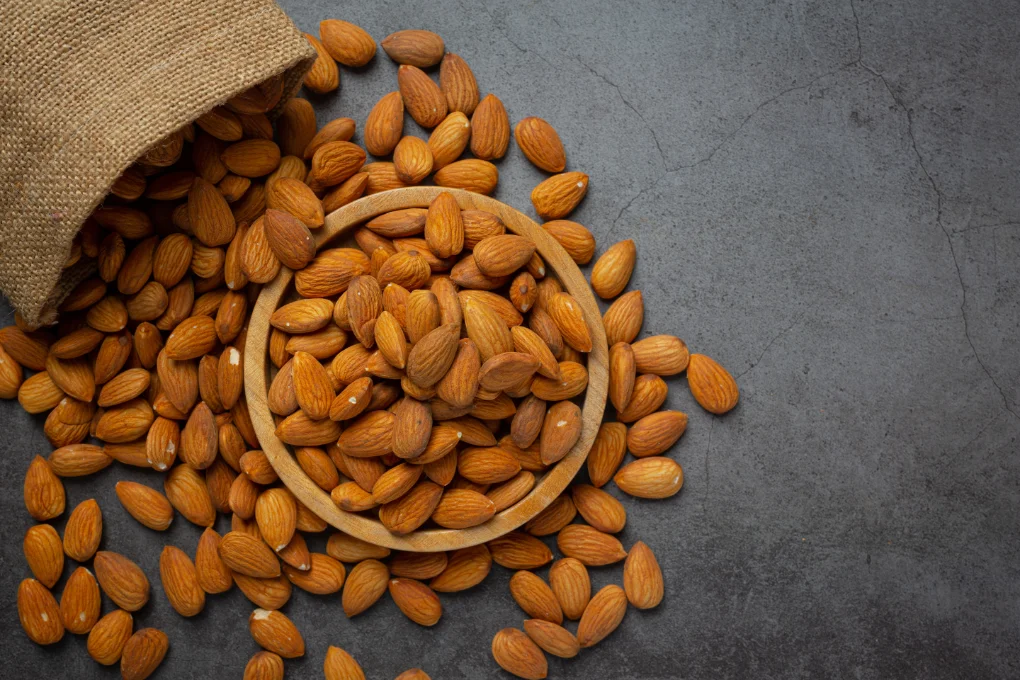
Vitamin B17 Foods Ranked by Amygdalin Content
Values are milligrams of amygdalin per gram of the seed or food, measured by HPLC in peer-reviewed studies. Amounts vary with variety, growing conditions, harvest year and ripeness1,4, so treat them as typical figures rather than exact values for any one fruit.
| # | Food (part) | Amygdalin (mg/g) | Notes |
|---|---|---|---|
| 1 | Bitter apricot kernel | 44–64 | Average 55.6 mg/g across three bitter Turkish cultivars4 |
| 2 | Bitter almond | 33–54 | Mean about 40 mg/g across bitter varieties3; other studies report up to 68.5 mg/g1 |
| 3 | Green plum kernel | 17.5 | Highest of the retail fruits tested; plum kernels vary greatly by variety (0.44–17.5 mg/g)1 |
| 4 | Apricot kernel (retail fruit) | 14.4 | Sweet cultivars measured 6.0–15.8 mg/g, averaging 8.6 mg/g4 |
| 5 | Black plum kernel | 10.0 | 1 |
| 6 | Peach kernel | 6.8 | Other studies report anywhere from 0.02 to 43 mg/g depending on cultivar1 |
| 7 | Red cherry kernel | 3.9 | One older study reported 65 mg/g for sour (Morello) cherry kernels1 |
| 8 | Apple seeds | 1.0–3.9 | Range across 15 apple varieties2; Royal Gala measured 3.0 mg/g1 |
| 9 | Black cherry kernel | 2.7 | 1 |
| 10 | Purple plum kernel | 2.2 | 1 |
| 11 | Yellow plum kernel | 1.5 | 1 |
| 12 | Pear seeds | 1.3 | 1 |
| 13 | Red plum kernel | 0.44 | 1 |
| 14 | Zucchini (courgette) seeds | 0.21 | 1 |
| 15 | Nectarine kernel | 0.12 | Lowest of the stone fruits tested1 |
| 16 | Honeydew melon seeds | 0.12 | 1 |
| 17 | Squash seeds (Crown Prince) | 0.11 | Acorn and kabocha about 0.071 |
| 18 | Cucumber seeds | 0.07 | 1 |
| 19 | Sweet almond (supermarket) | ~0.06 | US commercial varieties, typically under 0.2 mg/g3; some sweet genotypes elsewhere have tested higher1 |
| 20 | Marrow seeds | 0.06 | 1 |
| 21 | Butternut squash seeds | 0.01 | 1 |
The vegetable-seed values (rows 14, 16–18, 20–21) are close to the limit of detection and varied widely between samples — treat them as trace rather than precise figures1.
Amygdalin in everyday processed foods
Processing such as juicing, heating and removing the stone lowers amygdalin sharply. These products contain tens to hundreds of times less than the raw seeds and kernels1:
| Product | Amygdalin (mg/g) |
|---|---|
| Toasted almonds | 0.12 |
| Pressed apple juice (100% Bramley) | 0.09 |
| Canned peach slices in juice | 0.06 |
| Almond milk | 0.05 |
| Canned apricot slices in juice | 0.05 |
| Peach drink | 0.04 |
| Almond flour | 0.03 |
| Canned prune slices in juice | 0.03 |
| Apple puree | 0.02 |
| Marzipan | 0.02 |
| UHT apple juice | 0.004 |
| Cider | Not detected |
| Apricot cereal bar | Not detected |
| Toasted pumpkin seeds | Not detected |
Foods Often Listed as B17 Sources That Contain a Different Compound
Amygdalin is one of many cyanogenic glycosides — plant compounds that can release cyanide when broken down. Cyanogenic glycosides occur in more than 2,500 plant species, but amygdalin itself is concentrated mainly in the rose family (Rosaceae), which includes apricots, plums, peaches, cherries, apples, pears and almonds1. Several foods that often appear on B17 lists contain a related compound, not amygdalin itself1:
| Food | Main compound | Practical note |
|---|---|---|
| Cassava (yuca) | Linamarin, lotaustralin | Must be peeled, soaked and fully cooked; never eat raw |
| Lima beans and butter beans | Linamarin | Always cook thoroughly |
| Flaxseed | Linamarin and related glycosides | Normal culinary amounts are not a concern |
| Sorghum | Dhurrin | Levels in foods made from the grain are low; normal consumption is not a concern6 |
What About Berries, Leafy Greens, Grains and Beans?
These foods appear on nearly every B17 list online, but none have reliable published amygdalin measurements. The lists trace back to mid-20th-century writing about "nitrilosides" — a broad grouping of plant compounds that was never based on laboratory measurement of amygdalin itself.
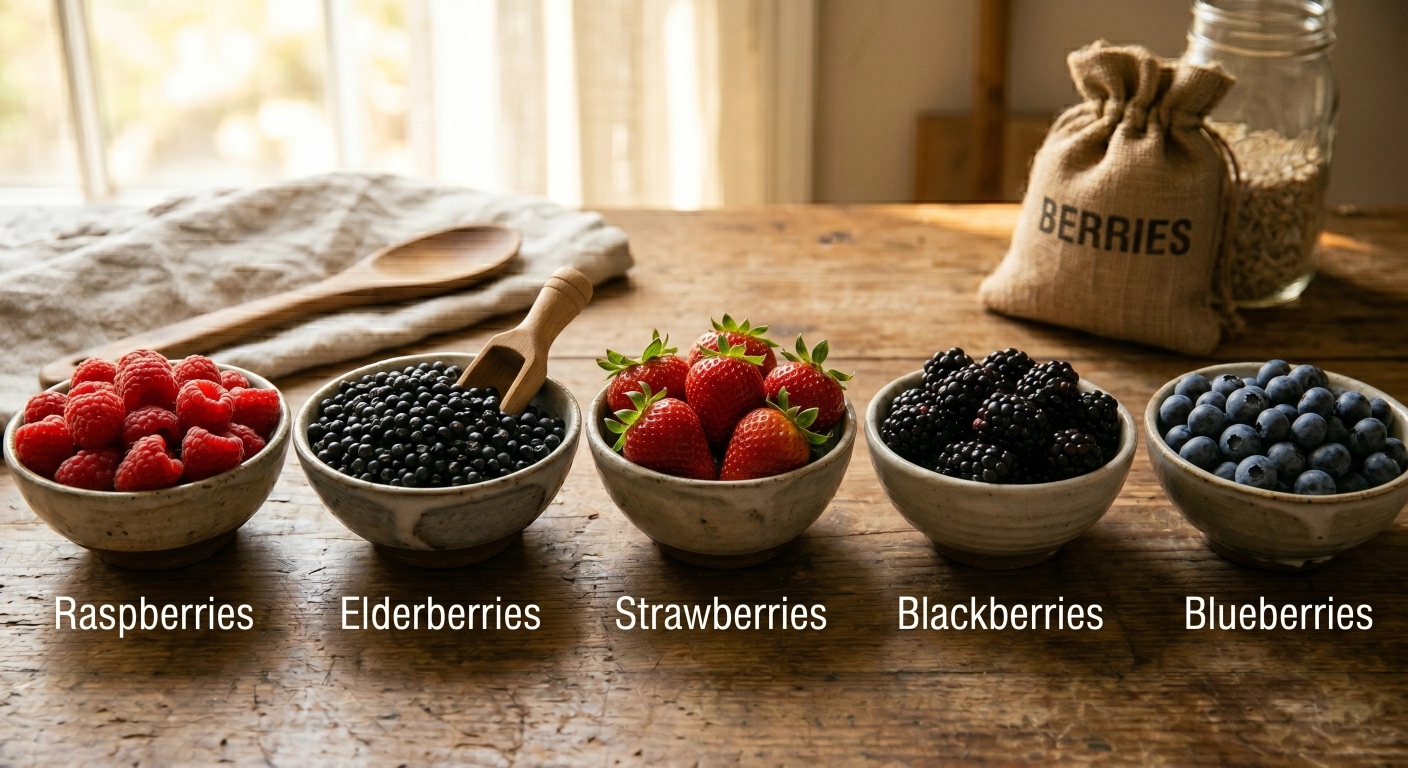
Strawberries, raspberries and blackberries belong to the same plant family as apricots (Rosaceae), so their tiny seeds may contain trace amounts of amygdalin. However, no dependable measurements exist for the edible fruit flesh, and the seed-to-fruit ratio is too small to make berries a meaningful source.
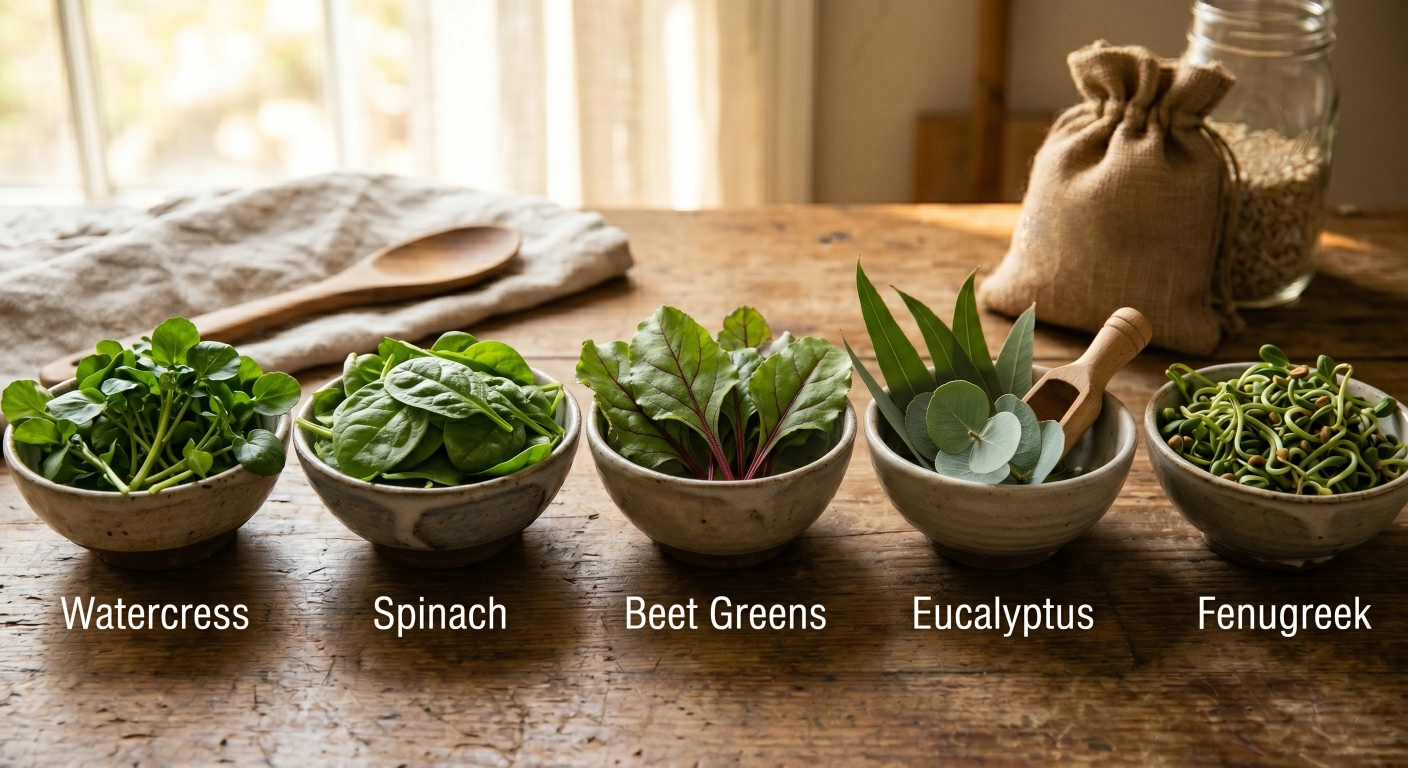
Watercress, spinach, beet greens and sprouts are nutritionally dense, but we have not found published data showing meaningful amygdalin in any of them. Their appearance on B17 lists reflects the older nitriloside classification, not laboratory testing of amygdalin content.
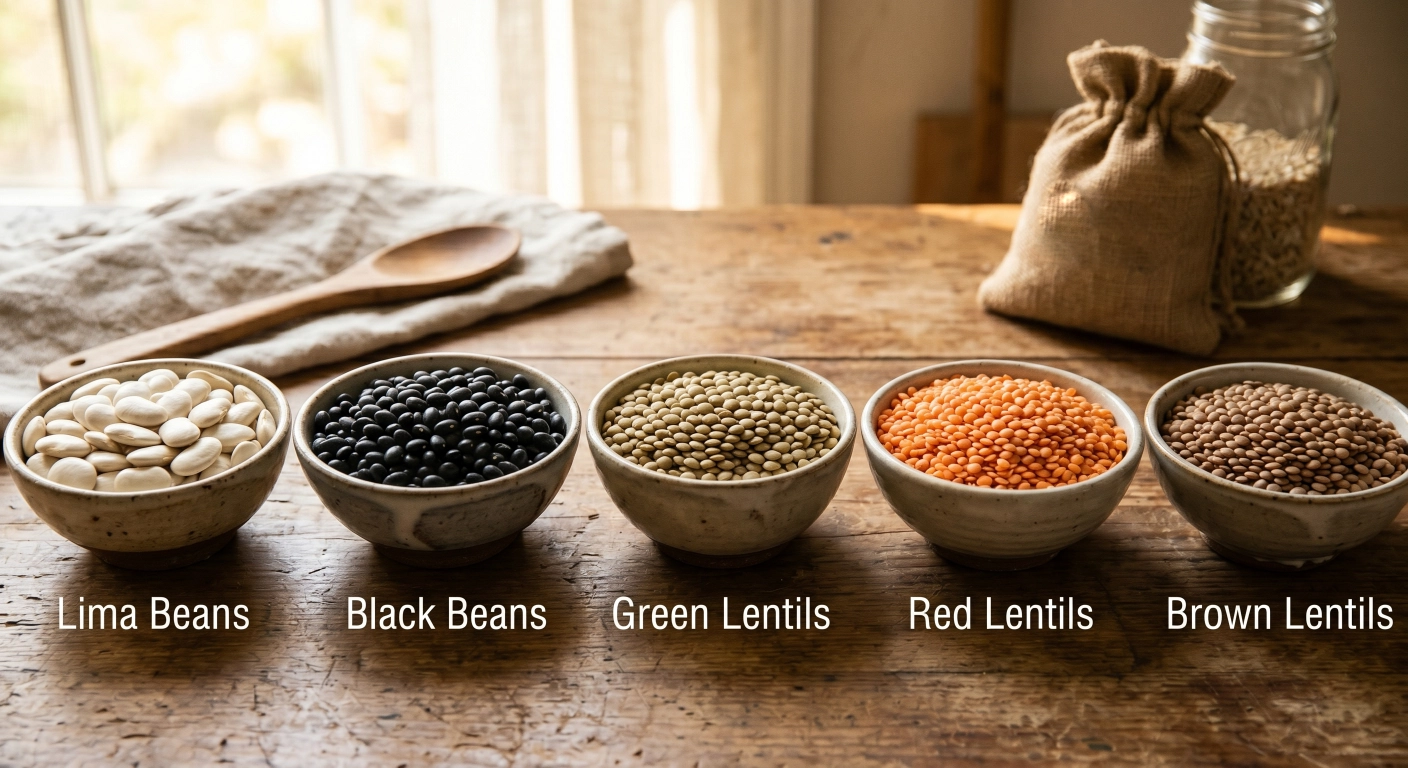
Lima beans and lentils contain linamarin, a different cyanogenic glycoside — not amygdalin. As noted in the table above, linamarin is broken down by different enzymes and has a different chemical structure. Always cook beans and lentils thoroughly, which deactivates the seed enzymes that release cyanide from linamarin.
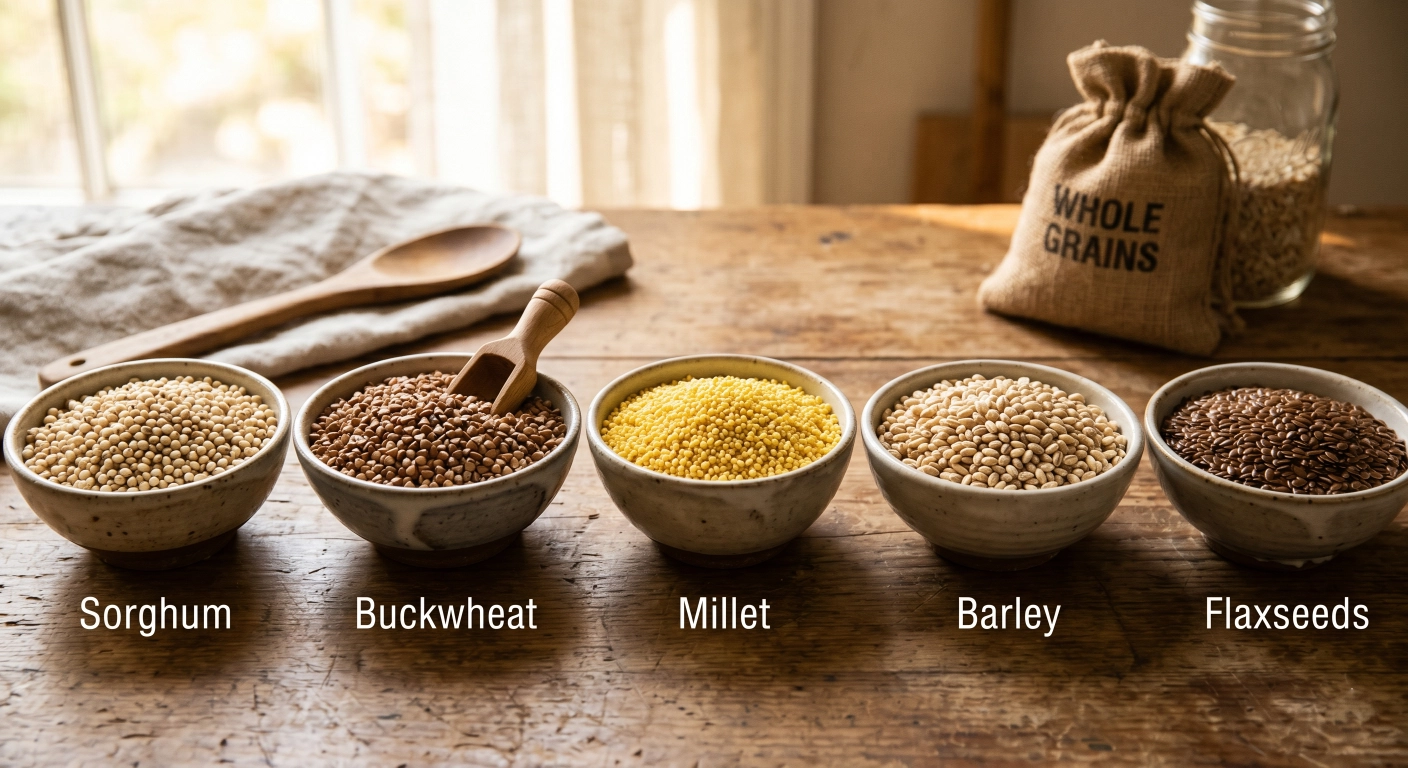
Sorghum contains dhurrin, and flaxseed contains linamarin and related glycosides — neither is amygdalin. Millet, buckwheat and barley have not been shown to contain significant cyanogenic compounds at normal consumption levels. All of these grains are worth eating for their fiber, B vitamins, minerals and protein, but not as sources of amygdalin.
Is Vitamin B17 Actually a Vitamin?
No. "Vitamin B17" is a popular name for amygdalin and for laetrile, a related semi-synthetic compound. Chemically, amygdalin (C20H27NO11, molar mass about 457 g/mol) is a glycoside made of two glucose units attached to mandelonitrile, the part that can release cyanide7. It is not recognized as a vitamin: the body does not require it, there is no deficiency condition, and no official body sets a recommended daily intake. For the history of the name and the research on amygdalin, see Vitamin B17, Amygdalin, and Laetrile: Understanding the Differences.
How Many Apricot Kernels Are Safe to Eat?
For more on the nutritional makeup of the kernel itself, see our apricot kernel nutrition profile.
Frequently Asked Questions
What foods contain the most vitamin B17?
The richest sources are the kernels inside stone fruits. Bitter apricot kernels and bitter almonds contain the most amygdalin (roughly 30 to 65 mg per gram), followed by plum, apricot and peach kernels. Apple and pear seeds contain smaller amounts. The fruit flesh itself contains little or none.
Do blueberries contain vitamin B17?
There is no reliable published measurement showing meaningful amygdalin in blueberries. Berries appear on many older B17 lists, but those lists were not based on laboratory testing of amygdalin. Blueberries are nutritious for other reasons, but they are not a practical source of amygdalin.
Do almonds have vitamin B17?
It depends on the type. Bitter almonds are one of the richest known sources of amygdalin, with about 33 to 54 mg per gram, and are not sold as regular snack almonds in the US for that reason. The sweet almonds sold in US supermarkets contain only trace amounts, typically well under 0.2 mg per gram, although some sweet varieties grown elsewhere have tested higher.
Do apple seeds contain vitamin B17, and are they dangerous?
Apple seeds contain about 1 to 4 mg of amygdalin per gram, depending on the variety. Swallowing a few seeds whole with an apple is not considered a health concern, but you should not chew or grind large quantities of apple seeds, because crushing them is what allows cyanide to be released.
How many apricot seeds can you eat a day?
Very few. The European Food Safety Authority estimates that an adult can eat about 0.37 g of raw apricot kernel, roughly three small kernels, in one sitting without exceeding the safe limit for cyanide exposure, and that less than half of one large kernel can already exceed it. For toddlers the limit is about 0.06 g, around half of a small kernel. Children should not be given apricot kernels.
Is vitamin B17 a real vitamin?
No. Vitamin B17 is a popular name for amygdalin and related compounds, but it is not recognized as a vitamin by nutrition science. The body does not need it, there is no deficiency condition, and it has no recommended daily intake.
Authentic Novodalin Products
Looking for Novodalin Amygdalin Products?
TJ Supply distributes authentic Novodalin products with the amount of amygdalin stated on every label. ≥98% HPLC verified · GMP certified · Free US shipping over $90.
This article is for educational purposes only and is not a substitute for professional medical advice. These statements have not been evaluated by the Food and Drug Administration.
References
- Bolarinwa IF, Orfila C, Morgan MRA. Amygdalin content of seeds, kernels and food products commercially-available in the UK. Food Chemistry. 2014;152:133–139. doi:10.1016/j.foodchem.2013.11.002
- Bolarinwa IF, Orfila C, Morgan MRA. Determination of amygdalin in apple seeds, fresh apples and processed apple juices. Food Chemistry. 2015;170:437–442. doi:10.1016/j.foodchem.2014.08.083
- Lee J, Zhang G, Wood E, Rogel Castillo C, Mitchell AE. Quantification of amygdalin in nonbitter, semibitter, and bitter almonds (Prunus dulcis) by UHPLC-(ESI)QqQ MS/MS. Journal of Agricultural and Food Chemistry. 2013.
- Yildirim FA, Askin MA. Variability of amygdalin content in seeds of sweet and bitter apricot cultivars in Turkey. African Journal of Biotechnology. 2010;9(39):6522–6524. academicjournals.org/journal/AJB/article-full-text-pdf/F3210CD21468.pdf
- EFSA Panel on Contaminants in the Food Chain (CONTAM). Acute health risks related to the presence of cyanogenic glycosides in raw apricot kernels and products derived from raw apricot kernels. EFSA Journal. 2016.
- EFSA Panel on Contaminants in the Food Chain (CONTAM). Evaluation of the health risks related to the presence of cyanogenic glycosides in foods other than raw apricot kernels. EFSA Journal. 2019. doi:10.2903/j.efsa.2019.5662
- Liu X, Zhuo J, Zhang Y, et al. Optimization and comprehensive characterization of high-stability amygdalin nanoliposomes using response surface methodology for enhanced oral delivery. ACS Omega. 2025;10:61020–61031. doi:10.1021/acsomega.5c10570